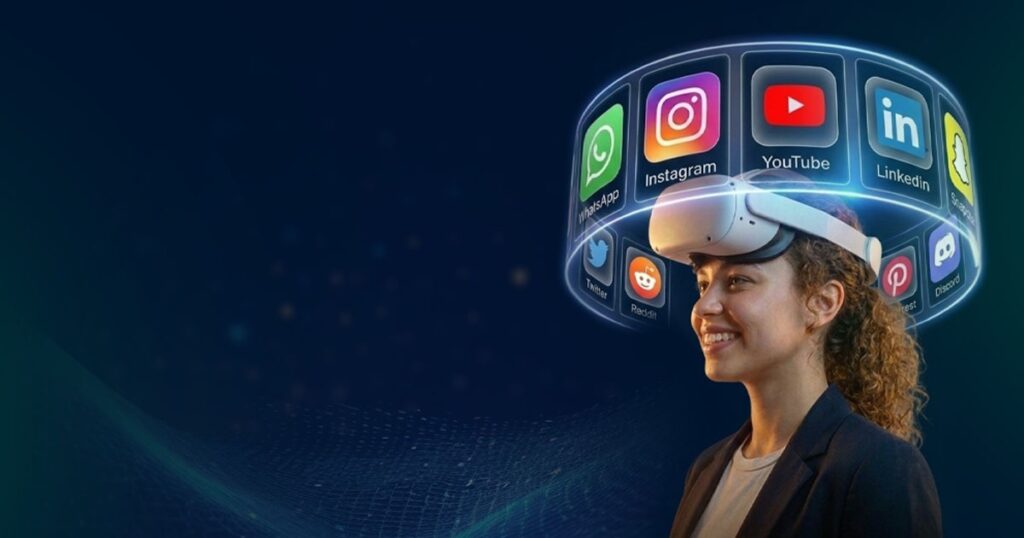

Social media is continually changing. By 2026, platforms will be changing more quickly than ever, and brands that fail to keep pace may end up falling behind. Whether you are a new business trying to gain some followers or an established company wanting to remain competitive, knowing the latest social media trends is not a choice anymore; it is a necessity.
Besides AI, facilitated content creation, and various ways of looking at short videos are causing a digital revolution that will most probably affect how companies develop, connect, and convert. This guide separates the real changes from the surface ones and tells you why your brand should care.
The Growing Importance of Social Media in Marketing
Social media has changed over the last ten years from a simple way to connect with people into a large marketing ecosystem. Marketing strategies are now reliant on social media trends to drive awareness of brands, get traffic to a website, and convert users into leads for future sales.
The average person now spends hours each day on social media sites like Instagram, LinkedIn, TikTok, and YouTube. This means that if brands wish to gain trust and build awareness, they must use social media to do so. The most successful businesses are those that engage their audience authentically and deliver value through their content.
Brands are beginning to incorporate social media marketing into their larger digital marketing efforts and develop seamless omnichannel strategies. If done correctly, social media can produce significant organic growth for companies and facilitate a long-term relationship with customers.
1. AI-Generated Content Is Becoming the Norm
Artificial intelligence has become much more than just a novelty tool. In 2026, companies of all sizes rely on AI to help them plan, write, and polish large volumes of content. A procedure that was previously extremely time, consuming now requires only a small part of the effort. However, here is the main thing: AI-generated content without human intervention is overlooked. People are able to perceive the difference.
The companies that are thriving today are the ones that view AI as a creative helper, rather than a substitute for genuine thinking and strategizing. They utilize it to create initial drafts, redistribute content on different platforms, and measure results. However, they continue to depend on humans for shaping the message, keeping the brand voice consistent, and establishing authentic connections with their audience. For any company that is putting money into social media marketing, being able to work with AI tools in a way that does not make them sound like robots is rapidly turning into an essential skill.
2. Short-Form Video Still Dominates, But Context Has Changed
Short-form video as an experience is not new; however, the way in which people will experience short-form video in 2026 is markedly different from how it has ever been before. The vast majority of audiences are now interacting with short-form videos not only as a form of entertainment but also as a part of their search journey. Many are using short-form videos for product research, service comparisons, skill acquisitions, and purchase decision-making. Due to the shift in search intent, video content is becoming one of the strongest assets within a digital marketer’s toolbox.
Video sharing platforms such as Instagram Reels, TikTok, and YouTube Shorts are continuing to prioritize evidence of engagement beyond just time spent watching an individual short-form video (including all short-form videos watched) for up to 60 seconds, which means businesses must consider hooks, pacing, captions, and CTAs in new ways.
As such, the businesses that develop a video strategy in alignment with how their target audience actually engages with video content to support their search journey will see significantly more successful results than those simply uploading or posting video content without consideration for their audience’s actual behaviour.
3. Community-Based Social Media Marketing
Another major change in social media trends for 2026 is the rising significance of online communities. Users are turning their attention to meaningful interactions instead of just passively scrolling through their feeds.
Consequently, brands are concentrating on community building via private groups, forums, and engaging content. Community-centric marketing fosters discussions, feedback, and a deeper brand connection.
Companies that put interaction ahead of advertisement will stand out among their competitors. Organizing real-time events, engaging with comments, and promoting content created by users are some of the best ways to fortify online communities.
This change is very much in line with social media marketing trends, where creating long-lasting relationships and trust are becoming more important aspects than simply resorting to traditional advertising.
4. Rise of Social Commerce
Social media sites quickly become shopping centers with the rise of social commerce in 2026. Consumers have the option to find products, see reviews, and buy items while still on the same social media sites.
For example, consumers use social media sites like Instagram Shops, TikTok Shopping, and Facebook Marketplace to shop in a seamless way.
Social commerce is a way for brands to eliminate friction from the buying process for consumers. Brands will increase conversions when they incorporate engaging content and allow consumers to purchase directly through their posts.
Companies will need to focus on producing attractive product images and creating fun shopping experiences on social media platforms to keep up with today’s social media trends.
5. Programmatic Advertising Is Getting Smarter
Besides paid social that has been a great way to drive growth, programmatic advertising in 2026 has changed a lot. Thanks to machine learning and real-time data, advertisers can now reach the right people much more accurately than before, so there is less wasted money and a better return on the ad investment. What’s really exciting about this is that programmatic advertising is now able to hook up with first-party data.
Since third-party cookies are being eliminated one platform after another, companies that have their own data, whether it is email lists or the way people behave on their website, are going to be at an advantage. Companies that hire competent digital marketing agencies are progressively turning to programmatic advertising not only for generating awareness but also for running the whole funnel campaigns that lead the prospects from the first encounter to the final purchase.
6. Authenticity Over Polish — The Creator Economy Effect
Although the quality of production is still essential, building a relationship with your audience is even more important. The way consumers view brand marketing is changing, as are their expectations for how marketing will communicate to them. According to a study conducted by the Influencer Marketing Association (IMA), consumers trust individual creators and smaller creator communities more than they do large corporations when it comes to general marketing communications. In 2026, consumers will trust individual creators and small creator communities over large-scale, polished corporate advertising.
To take advantage of this growing trend, many businesses are partnering with micro and nano influencers to create brand content that will resonate with consumers. Oftentimes, micro and nano influencer partnerships can produce better results for brands than traditional relationships because micro and nano influencer content feels more authentic due to their high level of trust from consumers.
Brands that are willing to be open, honest, exhibit personality, and interact with their audience in an authentic manner will cultivate the type of trust that leads to loyal, long-term customer loyalty.
7. Integration of Automation and Programmatic Advertising
Programmatic advertising and automation are likely to be the keys that guide social media marketing in the future. Thanks to these techniques, firms can send very personalized ads after checking the users’ behavior, just as it happens.
Programmatic platforms instantly sift through data and figure out where to display ads so that they are most likely to get good results. By doing so, they not only raise the level of efficiency but also decrease the need for human involvement while at the same time escalating the effectiveness of the campaign.
Marketers also rely on automation software to plan posts, track interaction, and gauge results. In fact, when these digital tools are combined with the creative minds of people, there is a remarkable enhancement in marketing outcomes.
In fact, nowadays astute companies are quite often joining hands with a trusted digital marketing agency to make the most of automation and sophisticated analytics.
The Role of Strategic Digital Marketing in Social Media Growth
The success of any business is not solely determined by trends; they serve as a guide, but how you implement your plans and strategies is what will actually determine your success. A company’s social media efforts need to be aligned with its overall marketing objectives.
Partnering with an established digital marketing agency will assist businesses in creating and developing successful marketing campaigns, measuring their success, and adjusting to changes within the social media landscape. Additionally, professional agencies will assist companies in utilizing social media along with other cutting-edge marketing methods and through the use of integrated digital marketing services.
Here, agencies like ClicX Technologies combine creativity, analytics, and strategy with technology to help businesses achieve quantifiable results in a highly competitive environment.
Let’s Wrap Up
The social media trends that will define 2026 are not merely about the launch of new features or platforms. They stem from a broader evolution in the way people access online content, gather information, and establish trust in brands. Companies that recognize these developments and reshape their marketing plans accordingly will undoubtedly come out on top. In fact, the main opportunities in social media marketing are accessible to almost everyone.
For example, creating authentic communities, purposefully utilizing short videos, responsibly using AI, or strengthening first-party data are all ways to capitalize on the new trends. At the moment, the brands that are thriving are not necessarily the ones with the biggest advertising budgets; rather, they are those that are most attentive and responsive. If you want to elevate your 2026 social media strategy, you should start immediately.
Discover the possibilities. Request a website review for free by a qualified expert. Reach out to us, and together, we can develop a strategy that truly succeeds.
FAQs
1. What are the largest social media trends in 2026?
The trends in social media include AI personalization, short-format videos, social commerce, community marketing, influencer authenticity, and automation.
2. What is the importance of social media trends to business?
They assist companies with changing strategies, enhancing interaction, finding new customers, and remaining competitive on the Internet.
3. What will help the brands grow organically on social media?
Produce great content, communicate with the audience, be a trendsetter, and post consistently.
4. Is it better for businesses to collaborate with a digital marketing agency?
Agencies offer location, insights, and skills to enhance marketing functionality and get enhanced results.
5. What is the frequency of updating the social media strategy of businesses?
Assess strategies after every three and six months, depending on performance data and industry developments.
6. Which content does best on social media?
Social media works best with short videos, educational posts, interactive content, and authentic storytelling.