
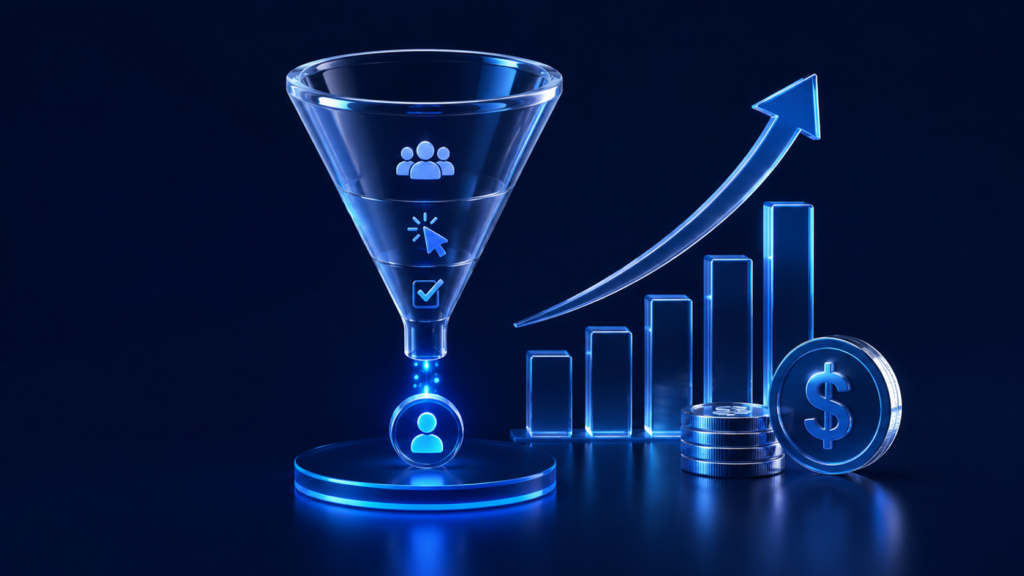

This difference largely revolves around performance marketing. Rather than investing in marketing activities blindly, companies nowadays favor approaches that exhibit concrete results. Regardless of the target – creating leads, boosting traffic to the site, or promoting online purchases – each marketing initiative is monitored and fine-tuned to yield enhanced performance.
This data-oriented tactic assists companies in making wiser decisions and getting the most out of their marketing expenditure. In this article, we will cover the basics of performance marketing, its mechanism, principal advantages, and the reasons for its rise as a critical element in contemporary digital marketing.
What is Performance Marketing?
Performance marketing is an approach to digital marketing where the advertiser only pays when a targeted action takes place. These can be things like a user visiting a website, submitting a form, buying a product, downloading an app, or generating a lead.
Rather than making payments solely based on ad exposure, enterprises wager on measurable outcomes. In reality, each campaign is supported by data and live performance indicators; this has made performance marketing one of the most economical ways to increase online presence.
Today, companies frequently implement performance marketing as a part of their digital growth strategy with SEO, content marketing, and PPC advertising.
How Does Performance Marketing Work?
If you do not know, you can ask yourself: How does performance marketing work?
Step 1: Develop a Plan
Each campaign starts with a clear goal, e.g.:
- Generate leads
- Increase online sales
- Drive website traffic
- Boost app downloads
- Improve customer acquisition
Step 2: Choose the campaign message
Platforms are selected by advertisers based on where their target audience is.
Common channels include:
- Google Ads
- Meta Ads (Facebook & Instagram)
- LinkedIn Ads
- YouTube Ads
- Native Advertising
- Affiliate Networks
- Email Marketing
- Display Advertising
Step 3: Launch Campaigns
Creative ads include great copy, eye-catching imagery, and a call-to-action.
Step 4: Track Performance
Analytics tools track every click, conversion, and customer interaction.
Step 5: Optimize Continuously
Campaigns are continually refined by tweaking:
- Audience targeting
- Keywords
- Ad creatives
- Budget allocation
- Landing pages
- Bid strategies
The key to making performance marketing really effective is to continually optimize.
Performance Marketing vs. Affiliate Marketing
Performance marketing and affiliate marketing are also frequently confused. Affiliate marketing is a subset of performance marketing.
Performance marketing can include many different forms of paid media, including:
- Search engine marketing
- Social media advertising
- Display ads
- Influencer campaigns
- Affiliate marketing
- Native advertising
Third-party publishers advertise products and receive commissions for every sale or lead generated by their efforts through affiliate marketing.
That’s why all forms of affiliate marketing are performance marketing; however, not every form of performance marketing is affiliate marketing.
Why Does it Benefit Advertisers and Platforms?
Advertisers and advertising platforms are both able to find value in performance marketing.
Advertiser Benefits:
- Greater control over budgets
- High ROI
- Transparency in reporting
- Lower marketing waste
- Faster optimization of campaigns
- Ability to target customers better
Platform Benefits:
- Performance marketing creates a positive feedback loop for companies whose campaigns do well; therefore, these companies will keep spending on their campaigns
- Higher ad performance also enhances user experience because users can see more relevant ads.
How Does AI Work with Performance Marketing?
AI has changed the way that marketers approach campaign management forever.
Currently, AI has impacted how marketers manage their campaigns by:
- Finding audiences with high conversion rates
- Automating their bidding strategies
- Predicting how customers will behave
- Creating personalized advertisements
- Optimizing their campaign budgets
- Providing insights about how well the campaign is doing
- Providing increased conversion rates.
By allowing marketers to have instant access to large amounts of data, AI allows them to quickly evaluate thousands of data points to make superior decisions about their campaigns.
As a result, marketers will be able to spend more time working on strategy than on performing routine tasks.
What are the Different Types of Performance Marketing Channels?
Many marketing techniques are used in a successful strategy.
- PPC Advertising
With PPC marketing, enterprises can showcase themselves on search engines and pay only when the user clicks on their advertisements. One of the quickest ways to create targeted traffic.
- Social Media Advertising
Brands can target very specific audiences via platforms such as Facebook, Instagram, LinkedIn, and TikTok, depending on their interests and demographics. Social media advertising enables businesses to reach the right users based on their online behavior, making campaigns more effective and results-driven.
- Search Engine Marketing
Whenever someone conducts a search with the intent to buy a product or service, paid search campaigns can help get a business in front of those customers.
- Display Advertising
Banner ads enhance visibility on websites and apps and can help with remarketing campaigns.
- Affiliate Marketing
Affiliates use social media, blogs, websites, and more to advertise products and get rewarded with commissions on conversions.
- Native Advertising
Native ads are designed to seamlessly fit into the context of the website, which helps to minimize intrusiveness and can enhance engagement.
- Email Marketing
Email campaigns designed for performance focus on nurturing leads and getting them to make repeat purchases through the use of personalized messaging.
What are the Benefits of Performance Marketing?
Performance Marketing provides businesses with measurable advantages over previous types of advertisements.
Five Advantages of Performance Marketing:
- You can accurately track the performance of your campaigns.
- You can get a better Return on Investment for your marketing dollars.
- You can have a flexible budget for each campaign.
- You can quickly optimize your campaigns by making changes that lower your costs or boost sales as needed.
- You can target specific groups of people for your marketing messages.
The advantages listed above allow businesses to know what has worked and what hasn’t; therefore, companies can better focus their advertising efforts to maximize their return and improve future advertising efforts.
Performance Marketing Doesn’t Guarantee Overnight Success
The biggest mistake is believing that performance marketing is a matter of overnight success.
As much as organic marketing is a long-term game, paid campaigns can be quicker to yield results, but they still need:
- Continuous testing
- Creative improvements
- Landing page optimization
- Audience refinement
- Budget adjustments
- Strong customer experience
Successful campaigns grow over time and are continually optimized based on analysis of data.
Patience and planning are still key to long-term success.
How to Get Started with Performance Marketing?
If this is your first campaign, follow these helpful steps.
- Define Your Goals
Be very clear what ‘success’ means.
- Understand Your Audience
Gain a good understanding of customers’ interests, demographics, and online behavior.
- Install Tracking Tools
Analyze each step of the customer experience.
- Test and Improve
Iteratively run A/B tests to optimize performance throughout the year.
By avoiding some of the pitfalls and speeding up campaign success, it is best to work with an experienced digital marketing agency.
How Do You Measure Performance Marketing?
Performance marketing is based on the use of quantifiable data. Examples of key metrics associated with performance marketing are:
- Cost per click (CPC)
- Click-through rate (CTR)
- Cost per acquisition (CPA)
- Conversion rate
- Return on ad spend (ROAS)
- Customer lifetime value (CLV)
- Return on investment (ROI)
The above-noted metrics enable marketers to evaluate the effectiveness of their campaigns and help them decide how to make improvements to their campaigns.
Why Businesses Choose Professional Performance Marketing Services
To effectively manage paid marketing campaigns, you need an expert with experience in the industry who will continuously monitor and optimize your campaigns strategically. Experienced professionals can:
- Understand your audience’s behavior,
- Develop a keyword strategy,
- Allocate your budget appropriately,
- Improve your campaign results,
- Interpret your analytics, and
- Track conversions
When businesses partner with an expert such as ClicX Technologies, they can create scalable marketing plans that will yield measurable growth, in addition to maximizing every dollar spent on their advertising.
Conclusion
Performance marketing has turned into one of the most trustworthy means for businesses to produce measurable growth, attract qualified leads, and increase the return on marketing investments. Through data-oriented strategies, unceasing optimization, and AI-driven insights, businesses can take wiser steps and realize lasting results over time. Still, for the success of the long run, the correct strategy, continuous testing, and professional implementation are key. Let’s have a talk and get a FREE website audit with a certified expert.
See how a suitable performance marketing strategy can help your business become faster, increase the ROI, and remain in front of the competitors.
Frequently Asked Questions
1. What is performance marketing?
Performance marketing is online advertising that only charges for quantifiable outcomes such as clicks, leads, or sales.
2. What is better than performance marketing, brand marketing?
Both are important. Performance marketing is about results; brand marketing is about trust.
3. What is the time frame for performance marketing to yield results?
Some campaigns go through very quickly, and as long as you optimize them, they will go well.
4. Who are the right businesses for performance marketing?
Any business that wants to see measurable leads, sales, or growth online will benefit.
5. How much budget is required for performance marketing?
Budgets are dependent upon goals, competition, and the advertising platforms chosen.
6. Is it possible to increase the traffic to a website with performance marketing?
Yes. Quality campaigns bring in visitors that are ready to convert, and boost conversion potential.