
Marketing is changing as customer behaviour, technology, and digital platforms continue to evolve. The methods businesses used to reach customers a few years ago may not work in the same way today. People now discover brands through search engines, social media, online communities, videos, and AI-powered platforms.
For businesses, keeping up with these changes is important. Understanding the marketing trends of 2026 can help you decide where to focus your efforts, what kind of content to create, and how to connect with your target audience. Let’s look at seven trends that businesses should pay attention to while planning their marketing strategies this year.
Why are Marketing Trends Important?
Marketing trends help you understand shifts in consumer behavior and digital channels. They allow you to see what your customers want from companies and what marketing efforts might be worth testing.
For example, the popularity of short-form videos is impacting the way we view content, and the use of AI-powered search helps users search for information on the internet. Many businesses will be able to adapt their content and campaigns instead of the same tactic being used year after year.
But you don’t need to follow everything hot. The key is to figure out what’s a trend for your target audience and your business objectives. A trend should be useful to your marketing strategy, not be a distraction from it.
What are the Marketing Trends of 2026?
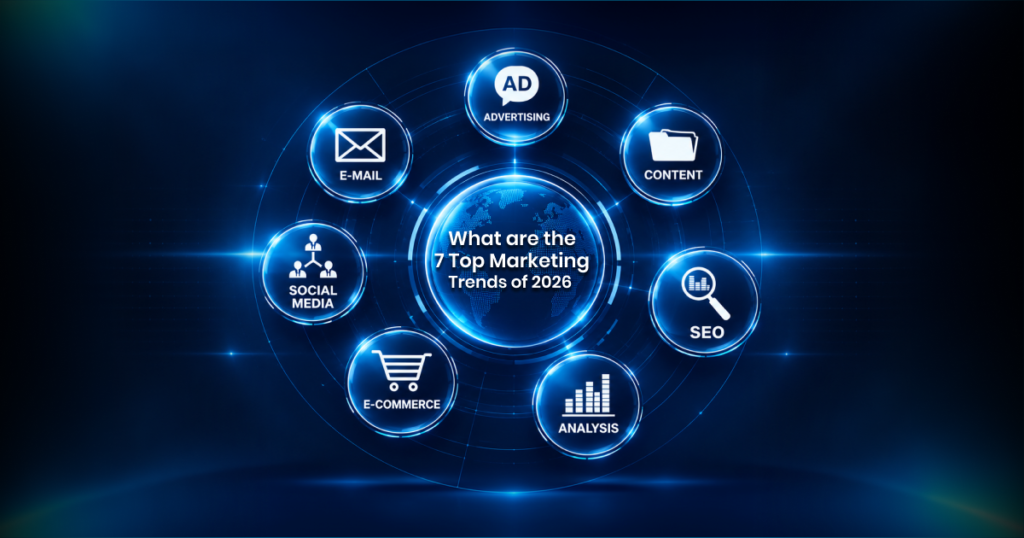
Marketing trends 2026: AI, meaningful content, customer experience, customer engagement, and more important brand relations are among the things growing in popularity in the marketing trends of 2026. And companies are paying greater attention to results and customer data.
Now here are seven digital marketing trends that will surely help you plan out your marketing strategies and activities a lot more efficiently.
1. How is AI Changing Digital Marketing?
AI is now a tool in normal marketing activity. It allows businesses to research content ideas, learn more about customer behaviour, generate draft campaigns, and analyse data on performance.
For instance, a brand can leverage AI-powered software to research topics its audience cares about or to generate variations of an ad. It will save time and enable marketing teams to run a higher number of tests.
But AI will not replace every piece of content. As a marketer, you will want to fact-check, keep your own tone of voice, and ensure your content adds value to the reader. Creating more AI content will not necessarily lead to better marketing.
2. Why is AI Search Changing SEO Strategies?
With the adoption of AI-powered search experiences, when people pose a question and want information, they are moving away from typing just a few keywords to search and are instead asking a complete question.
It is now beginning to impact how companies set up their search engine optimization (SEO) plans. The websites will need to inform the questions for their niche effectively, provide explanations, and offer helpful data for the reader and bots.
For your business, this will be about creating helpful content and avoiding keyword stuffing – the practice of adding keywords excessively or unnecessarily throughout a page. Good page titles, headings, relevant examples, and helpful, accurate content, plus a good website structure, will all still be important.
Search visibility still counts in its traditional way. No reason to give up on the SEO and rankings for traditional search; just consider how your content can be useful for people within various types of search experiences.
3. Why is Short-Form Video Content Still Important?
Short-form videos continue to be a useful way for brands to reach people on platforms such as Instagram, YouTube, and TikTok. People often prefer quick, easy-to-understand content that explains something or holds their attention.
Businesses can use short videos to introduce products, share tips, answer common questions, and show how their services work. For example, a skincare brand can share product demonstrations, while a digital marketing company can explain common SEO mistakes.
The content does not always need a complicated production setup. A clear idea, a relevant message, and good presentation can make a video useful to its audience.
Businesses should also pay attention to the platform they are using. A video that works well on one platform may need a different format or presentation on another.
4. How are Creator Partnerships and Influencer Marketing Evolving?
People tend to seek out opinions and suggestions before they purchase a product or service. This is one factor that helps creator partnerships still thrive in marketing.
Rather than target only huge influencers and celebrities, companies have also been collaborating with more niche creators who have a more personal rapport with their fan bases. This can include creators with more concentrated audiences around specific niches like fitness, tech fashion, food, or personal finance.
A fitness brand, for example; it could partner with a fitness creator who consistently posts workout videos and product reviews. That audience is already familiar with that category.
This is not about numbers! What matters is finding creators where the audience and content overlap with your brand. The collaboration has to be perceived as truthful and contextual, not as an ad embedded in the content.
5. Why are Online Communities Becoming Important for Brands?
Social media is not only about publishing posts and collecting likes. People also use online communities to discuss their interests, ask questions, share experiences, and learn from others.
This allows businesses to build stronger relationships with their audience. Instead of focusing only on promotional content, brands can take part in relevant conversations and share information that helps people.
For example, a software company can participate in professional communities where users discuss industry challenges. A food brand may build engagement through recipe discussions, cooking ideas, and customer experiences.
The aim is to create genuine interaction. Businesses that listen to their audience and respond to their questions can build stronger connections over time.
6. How is Social Commerce Changing Online Shopping?
Social media is evolving into a key place for discovery and shopping as well. A consumer might see a product in a video, view it in action, read comments, and then choose to investigate further.
As a result, social commerce is gaining importance in digital marketing. Product tags, shopping links, creator endorsements and sharable content can be used to link product discovery to the purchase process.
This can be as simple as a fashion brand creating a styling video and following it up with a link to its product page. Or a home decor company could showcase how their product would look when used as intended.
Make it easy; for example, ensure the product data, pricing, and checkout steps are easy to follow. In fact, make the customer journey from finding out about your product to purchasing it as simple as possible.
7. Why are Privacy-First Marketing and First-Party Data Becoming More Important?
Companies have used different kinds of customer data to learn about audiences and target ads. But as privacy preferences evolve and data collection practices shift, it’s worth reassessing how that data is gathered and used.
Because of this, the value of first-party data. First-party data covers your customer personally giving you their data by signing up to a newsletter or creating an account, submitting an enquiry form, or purchasing.
An online store could take advantage of data from customer subscriptions and past purchases to send out useful updates about their products. It could make it easier to speak to people who are already familiar with the store’s products.
It’s about having transparent access to information responsibly. Companies should be responsible for complying with privacy laws and educating their customers about how their information will be used.
How can Businesses Use These Trends to Improve Their Marketing Strategies?
Knowing about marketing trends is helpful, but knowing how to use them is critical. For example, a business may need to define the current marketing objectives before defining which marketing trends can help accomplish those objectives.
For instance, a business that is trying to increase web presence may want to revisit pertinent content and revisit its SEO plan. For example, a business that has a few new clients on the market might give short-form videos or collaborate with creators.
You don’t have to jump into all seven trends at the same time. Choose the activities that suit your business, try them on a small scale, and analyse the results before scaling up.
And don’t forget to monitor performance on a regular basis. Track website visits, engagement, enquiries, conversions, and other metrics that tie into your business objectives. This will indicate what’s working well and what might require tweaking.
How can ClicX Technologies Help Your Business Adapt to Marketing Trends?
Keeping up with digital marketing changes takes time and regular effort. Businesses need to plan content, manage campaigns, improve website visibility, and understand how their audience responds to different marketing activities.
ClicX Technologies helps businesses plan their digital marketing activities according to their goals and target audience. From content marketing and campaign management to SEO and performance tracking, the focus is on building a consistent online presence.
If your business wants to improve its online reach, working with a team offering digital marketing services in Gurugram can help bring different marketing activities together. You can also explore professional seo services to improve your website’s search visibility and build a stronger organic presence.
The right approach depends on your business, audience, and available resources. A clear plan can help you use new marketing opportunities without losing sight of what your customers actually need.
Conclusion
The top marketing trends of 2026 show how important it is for businesses to keep learning and adapting. AI, changing search habits, short-form videos, creator partnerships, online communities, social commerce, and privacy-first marketing are all influencing how brands connect with customers.
You do not have to follow every trend to stay relevant. Focus on the ones that match your business goals, understand what your audience responds to, and keep improving your marketing activities based on actual results.
FAQs
1. What are the top marketing trends of 2026?
Some important marketing trends of 2026 include AI-powered marketing, AI search, short-form videos, creator partnerships, online communities, social commerce, and first-party data.
2. Why should businesses follow digital marketing trends?
Digital marketing trends show businesses how the behaviour of customers has changed and how the online platforms are evolving. Businesses can modify their marketing plan to target their customers better.
3. How is AI changing digital marketing in 2026?
AI assists businesses in researching content, planning campaigns, analyzing audiences, and tracking results. It can automate some aspects of marketing, but it’s not a substitute for human oversight when it comes to brand messaging.
4. Is content marketing still important in 2026?
Yes. Valuable content allows a business to provide the answers to customers’ questions, educate the public about their products or services, and earn their trust. Various blog videos, guides, and social media posts can be used for content marketing.
5. How can small businesses use the latest marketing trends?
Small businesses can begin by selecting the trends that cater to their target audiences and budgets. They can try out a few short-form videos, boost their website’s content, and leverage AI-based tools for content planning and creating better bonds with consumers on the online platforms that matter most.