
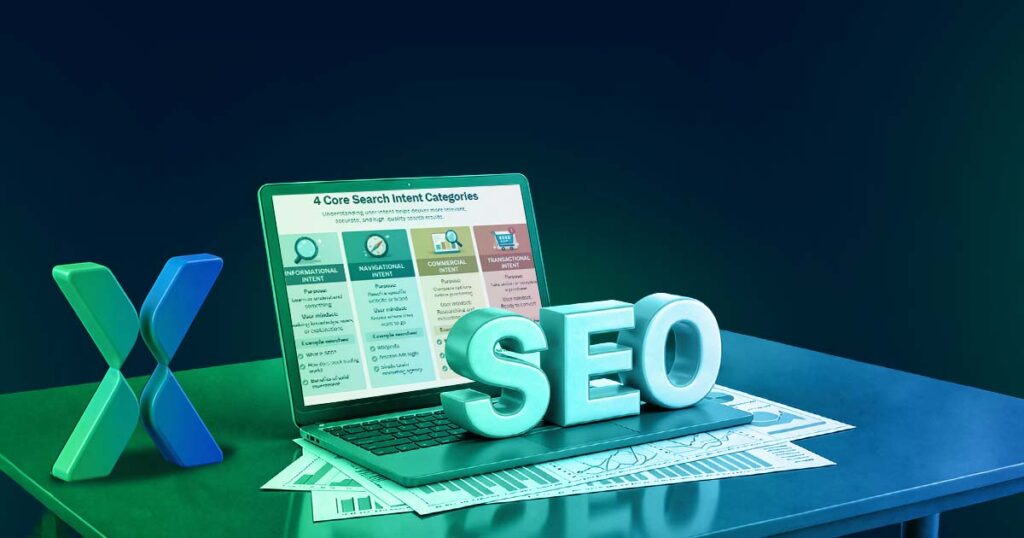

Search intent is basically the true meaning behind any query entered into a search engine. It shows what the user really wants to find, understand, or accomplish on the Internet. If a business comprehends the user intent, it can design content that is a direct answer to user needs rather than merely focusing on keywords. Nowadays, SEO is more about meeting the user’s intent than about ranking for high-volume terms. If your pages correspond to user expectations, you will get higher rankings, increased user engagement, and more conversions. This post is about the concept of search intent, its significance, the major types, and how it can be leveraged in devising a more intelligent SEO strategy.
What Is Search Intent?
When a person performs an online search, it is referred to as their intent behind the search. This is essentially the reason why they entered a particular term into Google or another search engine in the first place. This could include someone searching for knowledge (i.e., someone seeking a video tutorial), searching to buy something (i.e., someone seeking to buy an item), or someone comparing different types of products (i.e., someone wanting to know about how well a certain type of laptop performs against another type). It is important to understand the intent behind a search, as well as how that intent affects the type of results that search engines will return; therefore, knowing what the intent behind a search is is the first step in creating high-quality content that will drive traffic to a site.
Search Intent in SEO: Why It Matters
Search intent in SEO is extremely important as search engines primarily focus on satisfying users. If your content is not what users want, it will have a hard time ranking even if it is well-optimized. Furthermore, if your pages satisfy user needs, they will get more clicks, longer visits, and fewer bounces. These good signs communicate to the search engines that your content is useful. Gradually, this increases your presence and recognition. In short, matching intent is not an option anymore. It has become a necessity for continued SEO growth.
Types of Search Intent
The awareness of the various categories assists you in developing focused content strategies. And now, we can discuss each one of them.
- Informational Intent
Informational users want to know something or to get the answers to the questions. They may enter something like how to make websites fast or the benefits of content marketing. These are the types of searchers who are not ready to purchase; they are in the research stage.
Your content must also be aimed at offering valuable information, which is comprehensive. Guides, tutorials, and educational videos, as well as blog posts, are effective in this case. It is aimed at gaining power and gaining trust among the prospective buyers.
- Navigational Intent
The navigation searches take place when the user desires to locate a given site or page. They may enter such terms as Facebook sign-in or Amazon support. Such individuals are fully aware of their destinations; they are simply applying search engines as a map.
In the case of a business, this would be to make sure that your brand is visible when branded searches take place. Your contact pages, home page, and significant landing page must be readily identifiable.
- Transactional Intent
Transactional intent represents that the users are prepared to act. They may go online to see the running shoes, buy running shoes, or find the best price online deals on laptops. These high-value searches signify the intent to buy.
Friction should be eliminated in the buying process. Here, the product page, price, explicit call-to-action, and social proof, such as review will be critical.
- Commercial Investigation
It is halfway between informational and transactional. The user is in the decision-making stage and requires more information to make a purchase. Such searches as best smartphones 2026 or WordPress vs Shopify are such.
Comparison articles, lengthy reviews, and case studies are well-suited to commercial investigation questions. Assist the user to make informed choices, and they will have a memory of you when they are willing to make purchases under your brand.
How to Identify Search Intent
In order to determine user intent, you must consider multiple components; firstly, observe the search results by assessing the pages that Google determines are the most relevant to users at that time. The types of content that are ranked highest and the respective formats of each piece will exhibit trends regarding both content type and depth.
Second, look for trends among the actual keywords. Keywords such as “how,” “what,” “guide,” and “tutorial” indicate that users are searching for information, while keywords that include terms such as “buy,” “cheap,” “deal,” and “discount” reflect that users are searching with transactional intent. Additionally, keywords that refer to brand names often suggest users are performing a navigational search.
Next, review your own analytics to determine which pages generate traffic from which search queries, and how users behave after they access the pages. A high bounce rate can indicate a misalignment of user intent with your page content.
Optimizing Content for Search Intent
Writing content that truly meets the intent of users is something you can only do with careful planning.
Start off your work by conducting exhaustive keyword research and going beyond simply looking at how many times a keyword is searched for to really figure out the intent behind each query.
Organize your content properly. If your content is of an informative type, it should have a structure with clear headings, thorough explanations, and illustrations of the point through real-life examples. Pages that are transactional in nature need to have product descriptions that are convincing, the pricing must be clear, and the next steps should be obvious.
Choose an appropriate format. For some intents, videos work best, for others, it might be step, by, step guides, comparison tables, or interactive tools. Use the format in which the users expect to find the information.
Install features such as generative engine optimization strategies to help your content continue to be discoverable even as the search technology changes. Keep yourself well-informed of new trends that will enable you to remain ahead of the competition.
The Role of Intent in Modern Marketing
Current strategies in digital marketing are based on identifying and providing what users intend. Your content emphasis, whether you wish for it to promote a company’s brand name or drive conversions, must be determined by the user’s intent. Providing content based on what your audience is looking for creates an emotional connection that is more significant than previous methods of marketing. The intent-based approach in SEO changes the approach to implementing search engine optimisation as a customer service.
ClicX Technologies has succeeded with many businesses using successful search intent as the foundation of their optimization strategies. A critical element of this approach is to understand the individual behind a search query and the needs that exist for that person.
Common Mistakes to Avoid
Being inconsiderate in making content is one of the largest SEO errors. Other common errors include:
Using irrelevant keywords and overusing them.
Production of universal content.
Concentrating on rankings rather than on conversions.
The lack of mobile and page speed optimization.
Inability to upgrade content with changing user behavior.
These tips can be used to avoid these errors, and thus establish a long-term SEO strategy that really works.
How Businesses Can Use Search Intent Effectively
Businesses can leverage search intent to steer smarter decisions across marketing channels. First, organize your keywords according to intent type. Next, develop content corresponding to each group. Employ internal linking to direct users from informational to transactional pages. Monitor performance and adjust your strategies regularly. Such a method enhances visibility, engagement, and sales. At ClicX Technologies, this intent, the first strategy, has enabled brands to establish more robust digital bases and grow measurably.
Final Thoughts
Mastering search intent is more than just increasing your website rankings; It’s helping your users accomplish their goals. When you create high-quality content that helps your users to achieve their goals, your chances for achieving success will be much greater. Your audience interacts with your website every time they do an informational query, an engagement, or an action (that may include a purchase); Each time your audience interacts with your site is a value-creating opportunity to build a lasting relationship.
Are you ready to enhance your SEO through intent-based optimization? Let’s connect to a certified expert who can provide you with a complimentary website audit, so that we can pinpoint how to better align your content with your audience’s search intent.
Frequently Asked Questions
Q1. The difference between keywords & search intent?
Keywords are commonly used terms; search intent refers to the users’ goal behind typing those keywords.
Q2. How does Google interpret search intent?
Google uses data from past searches, user behavior, and content to ascertain what a user is looking for when conducting a keyword search.
Q3. Does a keyword have multiple types of search intent?
Yes, many keywords have multiple types of intent (i.e., informational, commercial, etc.) based on context. Therefore, content marketing strategies may vary depending on the intended audience.
Q4. How often should search intent be checked?
Search intent should be reviewed every quarter, or when there’s a noticeable decline in rankings due to changing customer behavior or market trends.
Q5. Does search intent impact local SEO?
Yes! Local searches often have specific types of intent (i.e., transactional or navigational). A detailed understanding of local intent will allow for local SEO to be optimized for maximum exposure.
Q6. What tools are available for identifying search intent?
Google Search Console, Keyword Research Tools, SERPS (Search Engine Result Pages) Analysis, and Google Analytics provide a variety of resources to help identify the intention associated with searched-for terms.